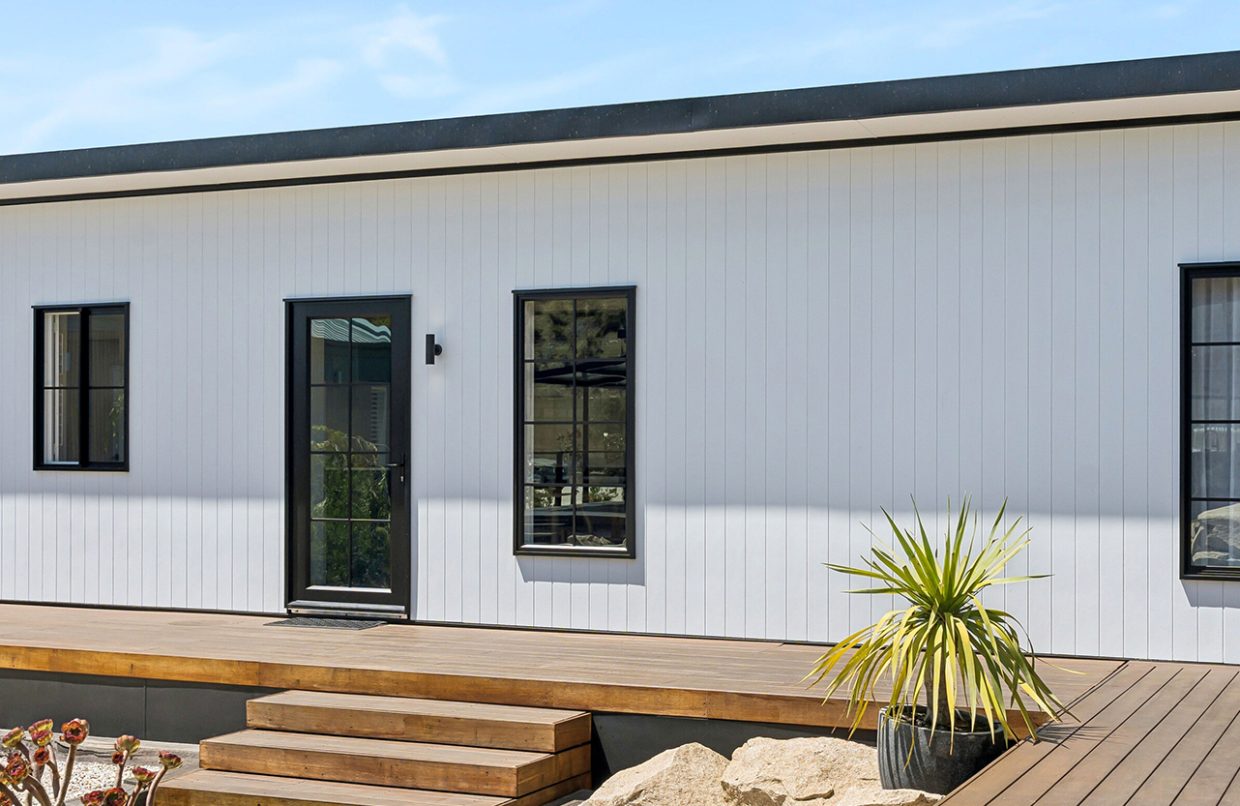
Building a granny flat is one of the easier property decisions West Australians can make right now. Paying for one takes a little more thought.
Since the planning rules changed in 2024, a compliant granny flat of up to 70m² can be built on a residential block of almost any size, and you can rent it out to whoever you like, not just family. That’s opened the door for thousands of Perth homeowners. But the question we hear most often at our Gnangara display village isn’t about design or approvals. It’s this: how do people actually pay for it?
For most of our customers, the answer is a construction loan secured against the home they already own. Here’s how that works, what it costs, and what your lender will be looking for.
Ask for the full project cost, not a building price
Before you talk to anyone about finance, get clear on what you’re actually borrowing.
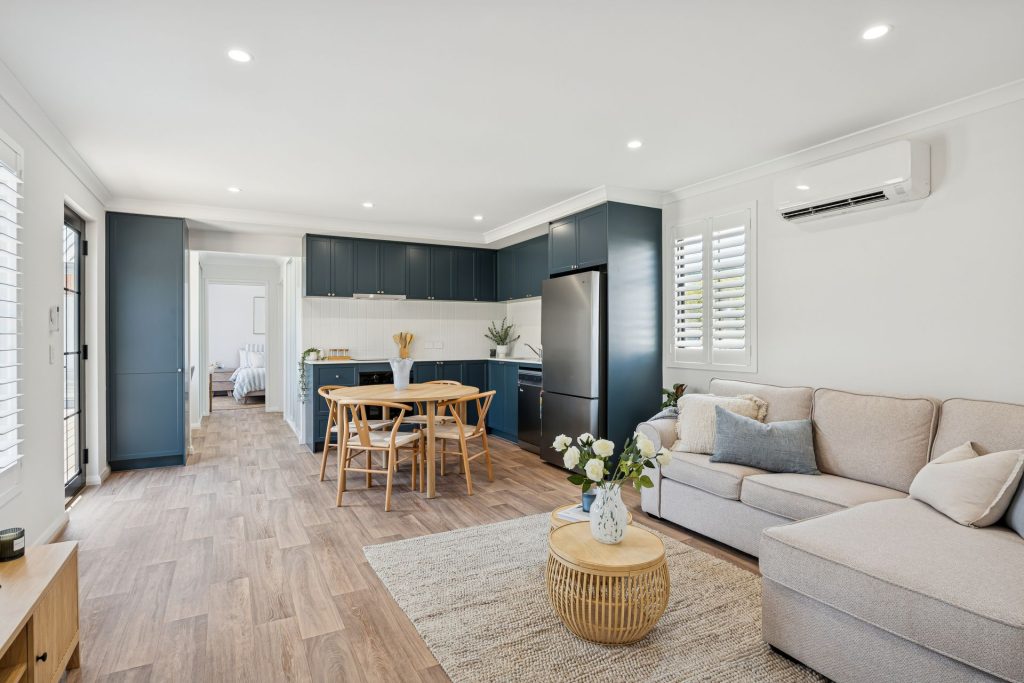
Our granny flats start from $119k for a panel build and $145k for a steel frame, but that figure covers the building itself. A finished, connected, ready-to-live-in granny flat is a bigger project. Site works, transport, crane hire, installation, service connections, permits and any modifications to the design all sit on top, and together they add up to a meaningful share of the total.
That gap catches people out, and it’s the single most common reason a granny flat project stalls halfway through. Ask any builder for a full project quote rather than a building price, and take that number to your lender. Every site is different, so the only figure worth borrowing against is one priced for your block. We’d much rather have that conversation with you at the start than three months in.
What is a construction loan?
A construction loan is a home loan built for something that doesn’t exist yet. Rather than handing over the full amount at settlement the way a standard mortgage does, the lender releases the money in stages as your build progresses.
Two things make it different from a regular loan:
- Progress payments. Funds are drawn down at set milestones, matched to your building contract. The lender usually confirms each stage is complete before releasing the next payment.
- Interest-only during construction. You only pay interest on what has actually been drawn, so your repayments start small and build as the project does. Once construction finishes, the loan typically converts to a standard principal-and-interest mortgage.
That second point matters more than people expect. Paying interest on the full amount from day one rather than as it’s drawn can cost you thousands over the life of the project. It’s a large part of why a construction loan often beats simply topping up your existing home loan.
Where your equity comes in
A granny flat, or “ancillary dwelling” in planning language, sits on the same title as your main home. It can’t be subdivided or sold separately, which means you won’t be taking out a second mortgage. The build is secured against the property you already own.
So your equity position determines what’s possible. If your home is worth $750,000 and you owe $350,000, you have $400,000 of equity, and a lender is assessing how much of that they’ll let you borrow against, alongside whether your income can service the additional repayments. In general, you may be able to access 80% or more of your equity, depending on the finance lender.
For a smaller, simpler project, or for owners with a lot of equity and a modest balance owing, a straight top-up of your existing loan can still be the easier path. Less paperwork, no progress-payment admin. It’s helpful to ask your broker to price both structures, because the right answer depends on your build cost, your timeline and how your current mortgage is set up.
Which lenders will actually do it
This is the part worth getting right early.
Because our granny flats are manufactured offsite in our factory and delivered to your block, the build doesn’t follow the traditional slab-frame-lock-up sequence lenders are used to seeing. A traditional construction loan releases funds for work completed on your land, which doesn’t sit neatly alongside a building that spends most of its construction life in a factory in Gnangara.
Some lenders have adapted to this and some haven’t. Bankwest and CommBank both have construction lending that accommodates prefabricated and modular builds, which makes them a sensible starting point for a Fox Granny Flat. Other lenders may still be workable, but confirm it before you get too far down the track. A five-minute question now can save weeks later.
Running the numbers on the investment
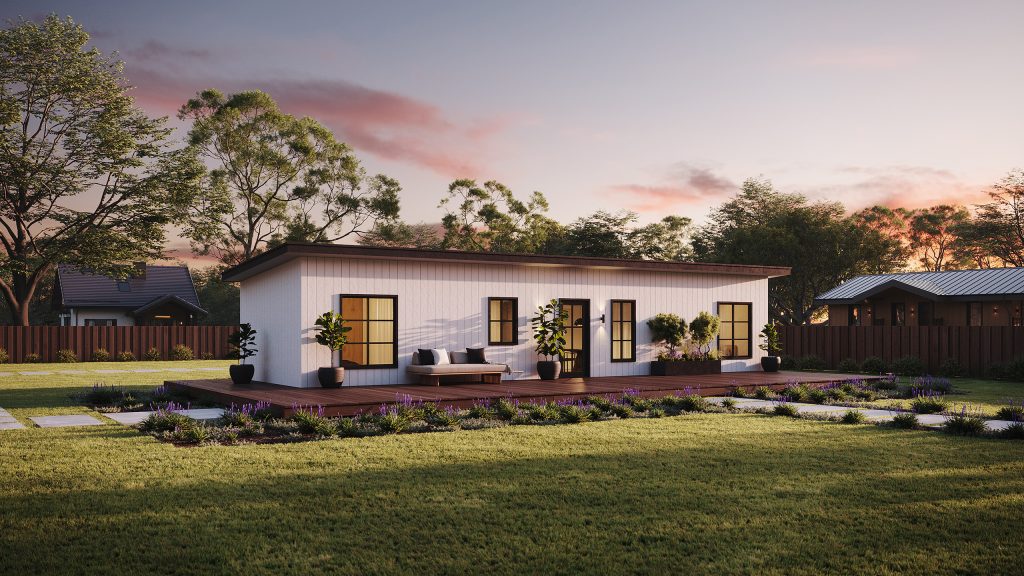
A granny flat is a genuine income-producing investment, and it helps to treat it like one before you commit.
Work out what similar one and two-bedroom properties rent for in your suburb, then weigh that weekly figure against the repayments on the loan you’d actually be taking on. In a tight Perth rental market, a well-located granny flat can cover a meaningful share of its own repayments, though be realistic rather than optimistic when you do this sum.
Beyond rent, a few things worth factoring in:
- Interest and depreciation may be deductible if the granny flat is genuinely rented out. Renting to family at below-market rates changes the picture, so get advice from your accountant before you assume anything.
- Capital gains tax can apply to the portion of your property used to produce income. Again, this is an accountant conversation, not a builder one.
- Relocatability. Every Fox Granny Flat is 100% relocatable. If your circumstances change, the building can move with you or be sold separately from the land, which is a form of flexibility a brick-and-tile addition can’t offer.
- Ongoing costs. Budget for landlord insurance, a slight bump in council rates, and any separate metering you choose to install.
What your lender will want to see
Whichever structure you land on, come prepared. Most lenders will ask for:
- A fixed-price building contract with a clear scope and payment schedule
- Plans and specifications for the granny flat
- Your building permit from the local council
- A copy of the certificate of title
- Evidence you can service the loan, including the new repayments
- An “on completion” valuation of the property
Three things to do before you apply for a construction loan
- Get a full project quote, not a building price. Site works and installation need to be inside your loan amount.
- Confirm your lender is comfortable with modular construction. Bankwest and CommBank are the usual starting points.
- Talk to a broker, not just your own bank. Lender appetite for granny flats and prefab builds varies, and a broker who has done it before will know where to take your application.
We can point you in the right direction
We’ve been building granny flats across WA since 2013, and we’ve watched plenty of customers work through the finance side of it. While we’re not able to give financial advice ourselves, we can give you an accurate project cost to take to your lender, explain how our build and payment stages work, and refer you to our preferred finance partners if that’s useful.
Call our team on (08) 6117 5719, or book a free consult and come see the range at our Gnangara display village.
This article is general information only and does not take your personal circumstances into account. It isn’t financial, credit or tax advice. Fox Granny Flats does not provide credit services or financial advice. Please speak with a licensed mortgage broker, financial adviser or accountant before making a decision. Pricing is indicative and correct at time of publication.


